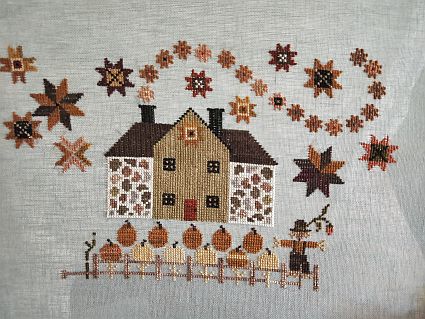
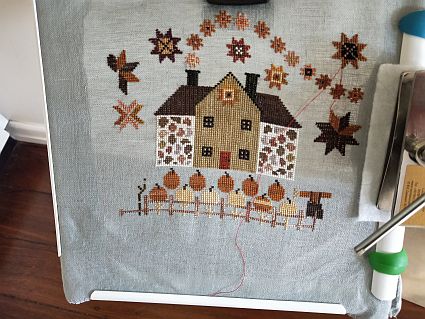
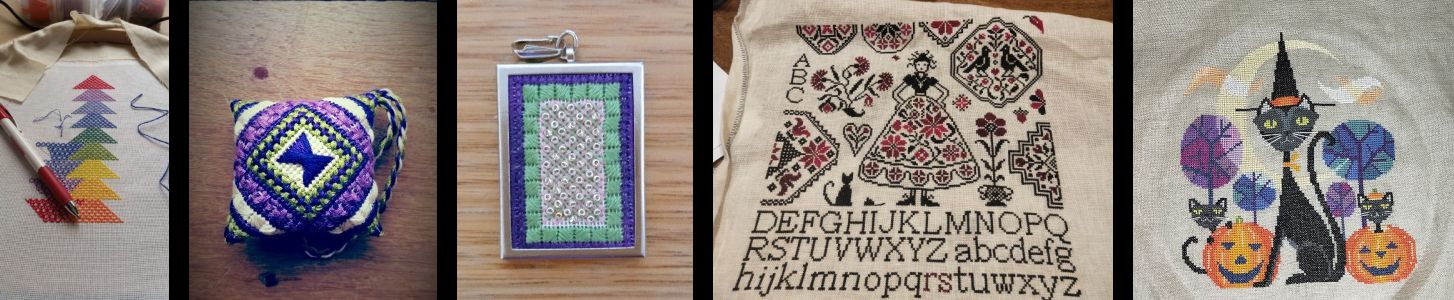
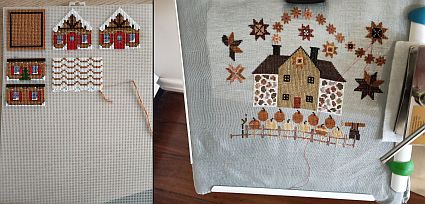
This is my year of finishes. I want to finish projects that I have started. Like my Cinnamon Stars project. This is what I work on at home, at my two stitching groups, I have been working on my Gingerbread House. It’s looking a bit ramshackle because I have sewn it altogether yet.
Below is my previous progress photo – I have now finished the top half and just have to work on the bottom left and right.
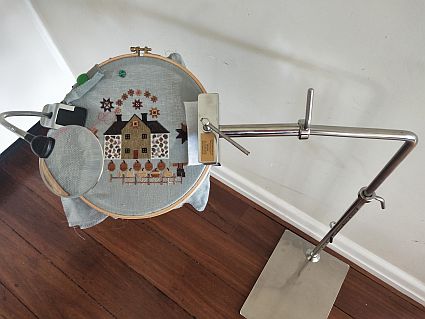
I think I finally have a set-up that works well. My Lowery frame, magnifier and working at a table.
Stitchers’ corner re-opened in its new location with a new owner, so, of course, I had to go and be supportive. The store is fabulous, so much beautiful stuff (and finally some modern patterns).
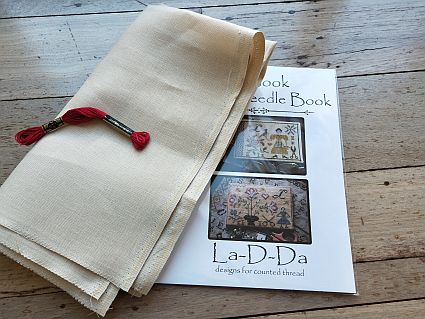
I want to try a higher count linen, so I only have to use one strand. The linen above is Newcastle (40 count) in colourway sand. I am also keen to try Au ver à soie 100/3
My plan is to stitch Modern Folk Embroidery’s Home Sweet Home, in a rich shade of red. I like the DMC 321 in the photo above, so I might choose that.
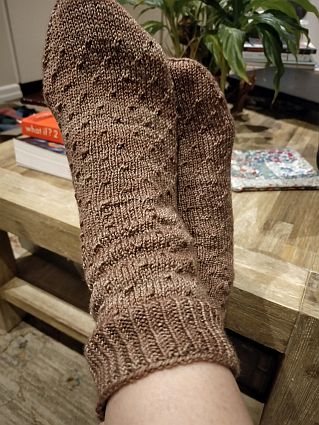
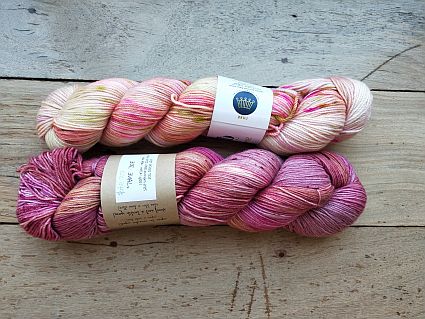
I read about cashmere, merino, nylon sock yarn and so, of course, had to get some. I bought them from ZigoZago, a shop in country Victoria (the service was fabulous and my yarn arrived within days!).
The one on the top in the image is Dream in Colour Smooshy Cashmere in the sonoran magic colourway, the one at the bottom is tôt le matin sock in the Jane Doe colourway (it doesn’t have any cashmere, but I loved the colour and it was the same postage for one skein or two).
I have been blogging for sixteen years! My first blog was on March 18th 2007 and I wrote about creating a snail trail quilt using my embroidery machine – I never did finish that quilt.
810 posts and 1234 images
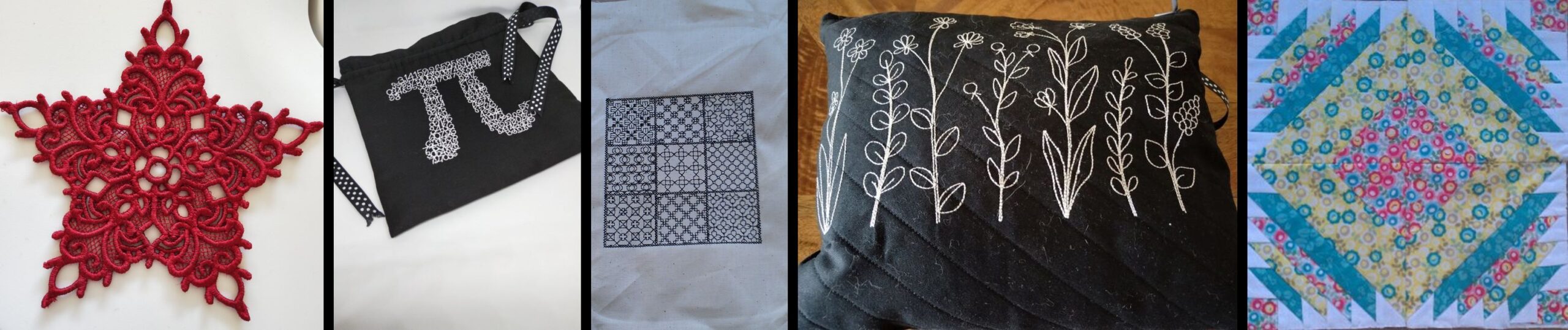
Back in the early days it was all about the quilting and the sewing. I did a lot of machine embroidery. I made the girls applique t-shirts for Easter and Christmas
And I went through a phase of making embroidered patchwork cards
I thought I could somehow turn my craft into a viable business, I tried making personalised T-Shirts. I went to that disastrous market and I even set up an Etsy store, but it was just a big fat failure.
And then, in January 2008, my love affair with knitting socks started. Over the years, I have had a lot of knitting failures; necklines too small, necklines too big, but the socks were always reliable. As far as my knitting goes, I am most proud of my Chemo blanket and Miss A’s blanket.
Miss A’s blanket on the left and the Chemo Blanket on the right
I was very chuffed with my Advent Calendar, which we still use every year
I have included book reviews and baking (I don’t do much baking now days).
In 2015, I started a Canvas work class, cue my interest in hand embroidery, in particular counted embroidery.
And I have bought so many hoops, embroidery stands, Q snaps (twice because I gave the first lot away!), but I think I have now settled on my lowery stand
Now that I look back over the past sixteen years, I can see that my more successful projects involved machine embroidery (why did I stop?). Miss A’s quilt (the sampler quilt) stopped me quilting altogether. I love doing cross stitch. My stash purchasing (for all crafts) is far greater than my ability to use these supplies and this makes me feel guilty.
A few knitting things I’m proud of
Machine embroidery
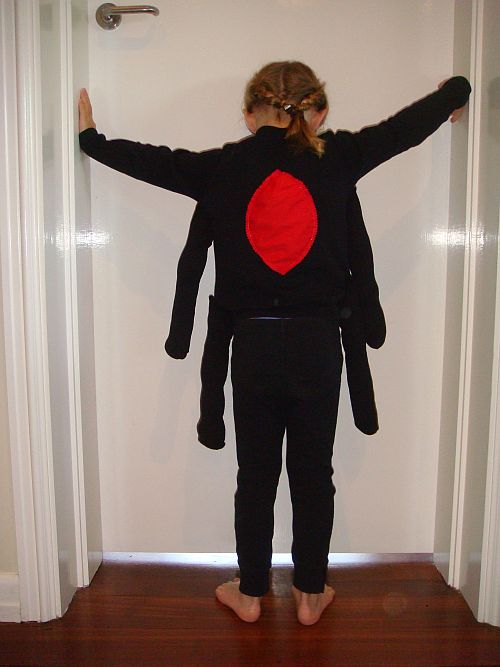
My redback spider costume
My hand embroidery sampler
What will happen in the next sixteen years?
Hopefully, I will finally finish the Sampler Quilt! And get back into more machine embroidery, more sock knitting, more cross stitch, more blanket knitting, maybe some shawls, more book reviews, and possibly a bit of weaving.
I get so much joy, contentment and satisfaction from crafting, despite not being very good at it. I now feel that I can do it simply because I enjoy it, with no need to turn it into some kind of side hustle.
I am not sure where I first heard about this book, Brenda Dayne may have mentioned it on her podcast. I found a copy on Abebooks and it slowly made it’s way to me (I wasn’t in any hurry).
Here’s the blurb …
In an era of global warming, war, escalating expenses, declining income, and drugs and violence in schools, many mothers feel they have little control over their families or their worlds. Nora Murphy eloquently demonstrates that many women do control one tiny thing: their next stitch.
While tracing the frustrations and joys of knitting a sweater for her son through the course of one cold, dark Minnesota winter, Murphy eloquently brings to life the traditions and cultures of women from many backgrounds, including Hmong, American Indian, Mexican, African, and Irish. Murphy’s personal stories — about her struggles to understand esoteric knitting patterns, her help from the shaman of the knit shop, and her challenges sticking with an often vexing project — will appeal to knitters as well as everyone else who has labored to create something from scratch.
We follow Nora as she knits her son a jumper and muses on the roles of knitting, textiles and craft in the lives of women. Ms Murphy’s writing style is conversational, you feel like you are sitting together knitting over a cup of tea.
If you like knitting, social history, women’s history, then you will enjoy this book. It is an easy read, with short chapters (I did a lot of ‘just one more chapter’).
Gingerbread House (Top Left) – I have almost finished one section of the roof and then its just the other roof section. I am only working on this at my stitching group, so it’s months from completion.
Cinnamon Stars (Top right) – I have worked on this for a few hours this week. While watching the movie version of Brideshead Revisited and a new SBS seriesVigil. I was watching Vonna’s floss tube yesterday and she mentioned that she only ever uses size 22 needles (regardless of the linen count), so I thought I would give that a go.
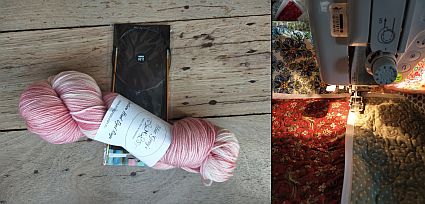
I have joined A Bee in the Bonnet’s Golden Honey Sock club, so the yarn (bottom left) is for the first pattern. I have since made it into a ball and started knitting the swatch.
More progress on covering the joins of Miss A’s quilt. It’s physical hard to man-handle the quilt through the machine.
There will be no new projects until some of these are finished.
I have added the table clamp to my lowery purchases. I wanted the extender bar for the stand and decided to combine postage. My plan is to use it for my stitching classes. It’s very sturdy, holds everything very still and doesn’t sag under the weight of my magnifier.
I have splurged and bought myself a new embroidery workstand – it’s a Lowery in stainless steel. I had considered them in the past, but thought they were too expensive and I made do with different table stands (but none of those were ideal). This is great. It’s so sturdy, my clip on magnifier doesn’t make it sag and I can sit on the couch and watch TV while stitching.
I am very happy with my purchase (which I got from JK’s cross stitching supplies – brilliant service). Now I am considering the table clamp for my friday morning stitching class.