Finished A Pair of Socks

I finished these socks – no photo sorry. I’m a bit disappointed – they are very baggy around my ankles. My fault – I didn’t do a tension (guage) square.

I’ve started another pair using this wool.

Freedom Spirit

 I’ve knitted a tension square (5 stitches per inch) and calculated I need to cast on 40 stitches (as apposed to the  64 I did with the finished socks.

Leave a Comment

Filed under Knitting

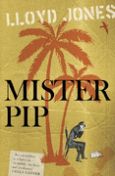
Mister Pip – Lloyd Jones

Mister Pip Lloyd Jones

Mister Pip, the winner of the 2007 Commonwealth Writers’ Prize, has been the novel of choice for many of my friends’ book clubs. For this reason I have been avoiding it but I finally succumbed.

Lloyd Jones, a New Zealand author, has written several novels (including This House has Three Walls and Book of Fame).

Mister Pip, for me at least, is about the power of literature to transform lives. To make us imagine different ways of living and being. Mister Pip is set in a small coastal village on the island of Bouganville during the 1990 civil war. A subject well know to Mr Jones as he was a journalist there during the conflict. The island is blockaded and most of the white people have left. Mr Watts, a white man married to a native women, agrees to teach the school. He reads Great Expectations to them. The children are entranced – the world of 19th century England becomes as familiar as their own village and Pip a member of their family.

 It was always a relief to return to Great Expectations. It contained a world that was whole and made sense, unlike ours.

and

As we progressed through the book something happened to me. At some point I felt myself enter the story.

This close relationship with a text creates problems, firstly with the more religious members of the village (like Dolores Matilda’s mother) and finally the dreaded ‘redskins’ (Government soldiers) who don’t believe Pip is an imaginary character and this has dire consequences for the villagers.

Matilda, our narrator, is 13 at the start of the story, but like Great Expectations, this story is related by the adult Matilda (across a vast distance of time and space). All of the characters are portrayed beautifully in a simple sympathetic manner – Mr Jones clearly liked his characters. During the course of the novel we watch Matilda’s relationship with her mother develop. It is a complicated relationship – there is obviously great love but also misunderstanding.

At first, Dolores enjoys hearing Matilda retelling the story of Pip, but then she fears Matilda’s obsession will take her away from her.

But that was the last time she asked to hear an installment from Great Expectations. And I blame ‘a rimy morning’. Although she didn’t say so I knew she thought I was showing off; and that I was biting off a bigger piece of the world than she could handle with language like ‘a rimy morning’. She didn’t want to encourage me by asking questions. She didn’t want me to go deeper into that world. She was worried she would lose her Matilda to Victorian England.

 The relationship between Mr Watts and Dolores is also beautifully written. At odds over the reading of Great Expectations they still respect one another.

 This was one of the times when I felt Mr Watts was personally addressing her. He was about to thread their old classroom debate into his account of the battle for the spare room. And she was ready.

And

On the sixth night, Mr Watts told a tale, his own I believe, that established the place of the nonbeliever. [ … ]If you were my mum you might have felt you were listening to an admission from a heathen that everything he said or believed was wrong. I have come to think of it as his gift to her.

 Mr Watts is another wonderful character. He is the only white man in the village, married to Grace (who appears to have lost her mind – we learn more about that later in the book). He is a gentle tolerant man who provides the children (through reading Great Expectations) a means of escape from the hideous reality of their lives.

The characters don’t develop through the story they just become more themselves or their better selves.

I recommend this book, but must point out that it contains some horrifying acts of violence.

Leave a Comment

Filed under Book Review

Suduko Quilt Top Finished

Suduko Quilt

The quilt top is finished. I think it is a bit busy, but I’ll reserve judgment until the end. I plan to piece the back using the left over pieces of fabric from the top.

1 Comment

Filed under Quilting

Japanese Quilt

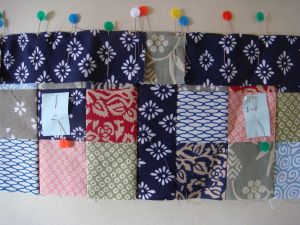
I thought it was time for more craft. Above is an image of the quilt I am making with my Japanese Fabrics. I’ve based the quilt on a suduko puzzle. That is, I have nine different fabrics and I have used a Suduko puzzle to determine the nine patch layout. I allocated each fabric a number between 1 to 9 and then used a completed suduko as the guide for the fabric placement.

I’m going to use one of the fabrics for the sashing and the remaining 8 fabrics for the squares in the sashing.

The image above shows part of a row with the sashing pinned on – the numbers pinned to the middle are the block numbers so I can make sure I get the blocks in the right places.

On a completely different topic – there is a fabulous post about Georgette Heyer here.

Leave a Comment

Filed under Quilting

The Good Parents – Joan London

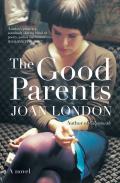
The Good Parents

My book club chose to read this book because of the this review – it was very glowing.

The general consensus at book club was that it was a good choice; one person loved it and no one hated it – unlike a few of our other choices.

Here’s a description …

Eighteen-year-old Maya de Jong has moved from Warton, country WA, to Melbourne, in the hope of finding work and getting away from the stifling environment of a small town. She’s never really suited Warton, and though she loves her parents and her younger brother, Magnus, the town holds no future for her. Through a family contact in Melbourne she lands a job working at Global Imports, a small operation owned by the enigmatic fifty-year-old Maynard Flynn, whose wife Dory is dying of cancer. Maynard is entranced by the impressionable Maya and the two begin an affair. Business is not booming and after the death of his wife Maynard is convinced by a shady business acquaintance to move interstate to start up another line of business. Maynard persuades Maya to go with him, to drop everything and leave immediately. She agrees, and they go despite the fact that Maya’s parents are on their way to Melbourne to stay with her for a couple of weeks. Jacob and Toni, Maya’s parents, turn up at her share house and are told by Maya’s housemate Cecile that Maya has disappeared and she doesn’t know where she is. And so begins a search, both physical and emotional, that spans the couple’s past and present. For Jacob and Toni, their whole identity has been about being good parents, or being good enough parents. With the disappearance of their daughter, everything they have stood for, believed about themselves over the years is called into question and will affect not only their notion of who they are, but their relationship with each other.

 Ms London writes beautiful prose her description of the toilets in Maya’s office building is fabulous. This novel was written from many different points of view, which I liked, but then I always like first person narratives. I think she writes well about adolescent angst – particularly teenage boys and her descriptions of ordinary events are full of detail and very convincing.

I enjoyed reading about Perth and Warton – it’s always nice to read a story set in your own town. I thought the accidental meeting at the MCG at the end was a bit too neat (I won’t say more because I don’t want to spoil the story). However, one of my friends did comment that things like that happen all the time. About two thirds of the way through the book I was ready for it to end, but overall my impression is positive and I shall try to read her other works.

Leave a Comment

Filed under Book Review

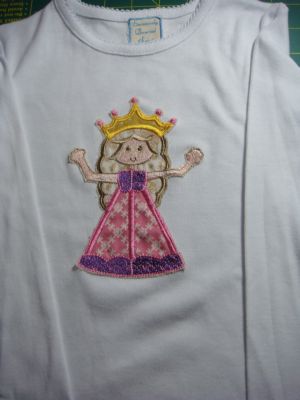
Princess and Dinosaur Appliques

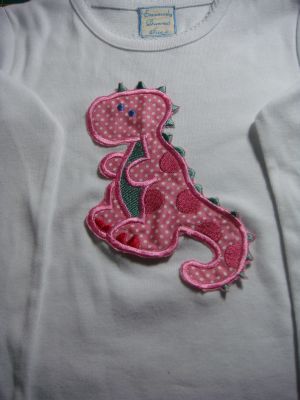
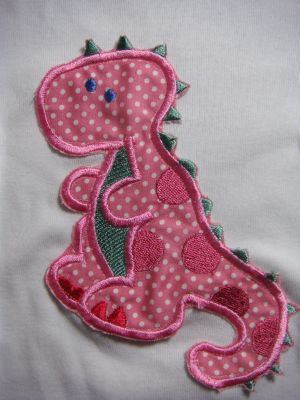
As P is very keen on dinosaurs and A on princesses, I decided to make them applique T-Shirts. I found the designs at Designs by Juju (I did briefly consider digitising my own designs, but as hers werre exactly what I wanted it seemed more efficient to just buy them – plus she had a buy two sets get two sets free offer!)

 I bought these ones …

Fit for a Princess Applique

Jacobean Floral Applique

Sunbonnet Belles Applique

Dinosaurs Roar Applique

The applique is quite time consuming, but easy to do. I’ve used calico as a base and then sewn them onto the T-Shirts afterwards (that way there isn’t a lot of thread on the inside of the T-Shirt and I don’t have to try to hoop a T-Shirt).

Dinosaur T-Shirt

Dino Applique T-Shirt

Princess Applique T-Shirt

Princess Applique

2 Comments

Filed under Machine Embroidery, Sewing

Knitting Night

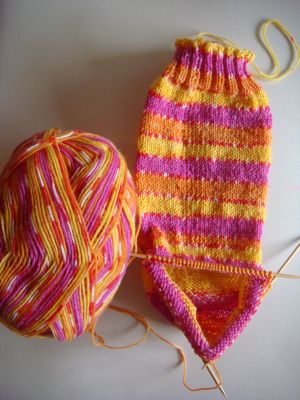
Sock

I’ve been going to Woolly Lattes knitting nights. While there I work on my sock and have a bit of a chat. The ladies that pop around to help are fabulous – calm and definitely not precious. They’re all about how knitting is relaxing and how we shouldn’t get stressed about it.

My sock is progressing. I’ve turned the heel and picked up the stitches and am now reducing back to my original number of stitches. This time I followed the general recipe in this book and it is much easier.

1 Comment

Filed under Knitting

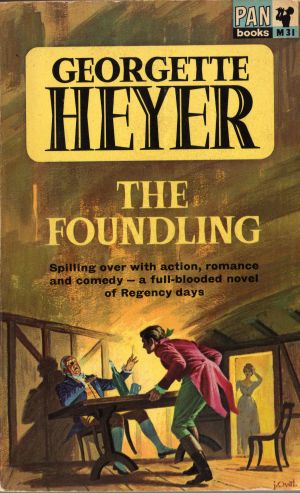
The Foundling – Georgette Heyer

The Foundling by Goergette Heyer

I’m a big Georgette Heyer fan. She writes regency romances (and some thrillers, but I’ve never read any of those). Her ‘regencies’ are meticulously researched and you can imagine the world of the ‘ton’ – her use of slang or cant can be a bit over the top, e.g.

‘He don’t look like a downy one to me’ objected the waiter. ‘And if he’s swallowed a spider he wouldn’t have handed me a fore-coachwheel only for asking of silly questions for him’

Her novels are very formulaic as she writes to her publisher …

It is a Regency society-comedy quite in my lightest vain. There is a certain young man who has appeared in several of my books – he was Cedric Brandon in The Corithian, Viscount Winwood in The Convenient Marriage – and some others!

She even refers to Mark 1 and Mark 11 heroes in her letters …

Mark 1: The brusque, savage sort with a foul temper

Mark 11: Suave, well-dressed, rich and a famous whip

Despite all of the above, I love her novels – they are like frivolous Jane Austen novels.

In The Foundling the Duke of Sale escapes his retainers and proceeds to have an adventure involving a run away school boy, a beauty and a charming cad.

The Duke was born after his father’s death and was a sickly child consequently he has been mollycoddled and protected all of his life. His uncle (and Guardian) informs him that he expects him to marry Lady Harriet Presteigne, as does Lady Harriet’s family, he is shocked and surprised, but still (and this I don’t understand) offers for her. While in London, he hears of his cousin’s woes and decides to solve his problems while pretending to be ‘plain Mr Dash’. He is involved in a series of rollicking adventures, but all ends happily.

The ‘foundling’ of the title is the beautiful Belinda who will go off with any man if he offers her a purple silk dress. Mr Liversedge, the villain, is hilarious. He is completely inept at blackmail and kidnap, but finally convinces the Duke to finance a ‘gaming hell’ on the continent.

Finally the relationship with Harriet. This was a bit disappointing. They were reluctantly engaged at the start (at least on the Duke’s part) and in love by the end, but I’m not really sure why of how the transition occurred.

The next Heyer on my list is Cousin Kate.


Leave a Comment

Filed under Book Review

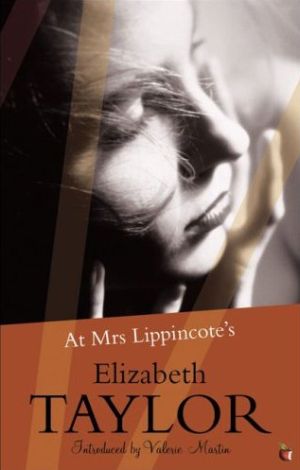
At Mrs Lippincote’s – Elizabeth Taylor

At Mrs Lippincote\'s Elizabeth Taylor

 I selected this book because it was recommended by Jane Brocket. I bought it from here (which, by the way, is a fabulous place – free postage!).

This is the blurb from the back …

Mrs. Lippincote’s house, with its mahogany furniture and yellowing photographs, stands as a reminder of all the certainties that have vanished with the advent of war. Temporarily, this is home for Julia, who has joined her husband Roddy at the behest of the RAF. Although she can accept the pomposities of service life, Julia’s honesty and sense of humor prevent her from taking her role as seriously as her husband might wish; for Roddy, merely love cannot suffice—he needs homage as well as admiration. And Julia, while she may be a most unsatisfactory officer’s wife, is certainly no hypocrite.

This is a subtle understated book about a time and place where women’s lives were stifled by custom and circumstance. Julia is married to Roddy, a junior officer in the RAF. They have a son, Oliver, and Eleanor (Roddy’s cousin) lives with them while recovering from a breakdown. Her special friend was

‘…reported missing, then killed and then, after a long time, a prisoner of war.’

Julia and Eleanor are polar opposites and Mrs Taylor uses these extremes to highlight that all women’s lives are narrow and confined. Eleanor wants to be married, preferably to someone like Roddy – possibly even Roddy – and if so she would support him in his career and ensure that he is well feed and cared for. Julia, however, is a free spirit who wants to have control of her life. For example, she wants to be able to go out and have a drink whenever and not just on ‘ladies night’. She can be relied on to say something vague or outrageous that will embarrass Roddy.
Roddy’s boss, the Wing Commander, shares an interest in the Brontes with Julia and Oliver (he also knits socks much to the inane twittering of the Officers’ wives). I think he is even in love with Julia. He provides them with an occasional treat – a hare some eggs – plus he encourages his daughter to befriend Oliver (a sickly isolated child who relates all of his experiences to something he has read). The depiction of the relationship between Julia and Oliver is one of the highlights of this novel.

Roddy, in my opinion, is simply a pratt! He has nothing in common with Julia – it seems a marriage where neither party can respect the other. And there is the lonely spinster Eleanor. She develops a relationship with Mr Aldridge (the carpentry teacher) and his communist friends. This group of communists provides Eleanor with a sense of belonging although sadly she is deluding herself – apart from Sarge none of the communists like her or think she is useful.

Mrs Taylor is a precise, elegant writer who provides us with glimpses into the consciousness of all of her characters. She excels at describing the ordinary in a compelling and somewhat menacing manner.

Finally there is the house – Mrs Lippincote’s. Mrs Lippincote has moved to a hotel and has rented her house fully furnished to Roddy (she has even left her family photos on display). This house is damp, dark and slightly sinister – a character in itself.

Read this book for the domestic detail of war time England or read it to appreciate the confined lives of middle class women.

Leave a Comment

Filed under Book Review

Quilt

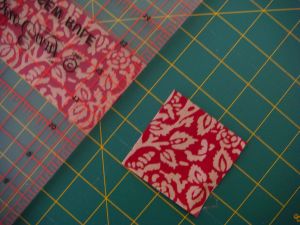
I’ve started cutting out this fabric. My plan is to do something with nine patches …

1 Comment

Filed under miscellaneous